

Project info
Client
Transcutan
Year
2024 - Ongoing
Services
- Product development
- Concept development
- Design research
- User studies
- User flows
- Industrial design
- Mechanical engineering
- Prototyping
- Project management
- Design for manufacturing
When safety, simplicity and technology need to work together
A new solution for peritoneal dialysis
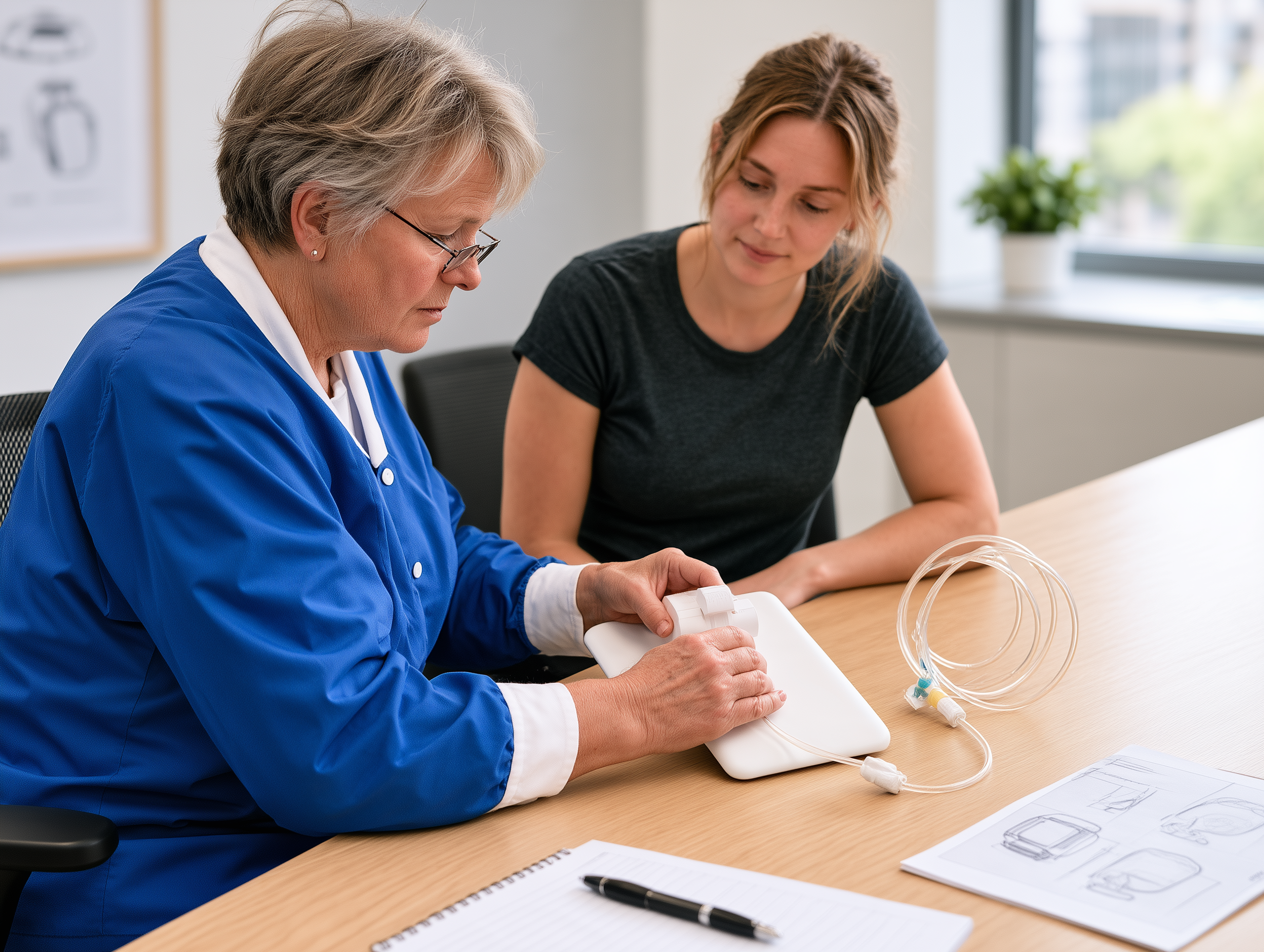
PD Connect is Transcutan’s new solution for fluid exchanges in peritoneal dialysis. It has been developed to make treatment easier to manage at home and easier to learn and use for both patients and healthcare professionals.
An important feature of the solution is its touch-free handling, which can help reduce the risk of contamination. Potential users have also highlighted improved ease of use, a greater sense of security and a more discreet aesthetic as positive aspects of the solution.
In peritoneal dialysis, the peritoneum, or abdominal lining, acts as a natural filter to clean the blood when the kidneys can no longer do so effectively. Dialysis fluid is introduced into the abdominal cavity through a catheter, where it absorbs waste products and excess fluid from the blood. The fluid is then drained and replaced with fresh solution.
With manual treatment, fluid exchanges are typically performed several times a day and can be managed by the patient at home. This means that patients repeatedly need to connect and disconnect the dialysis system from their catheter. This is precisely the process that PD Connect aims to improve.
From traditional connections to a discreet port
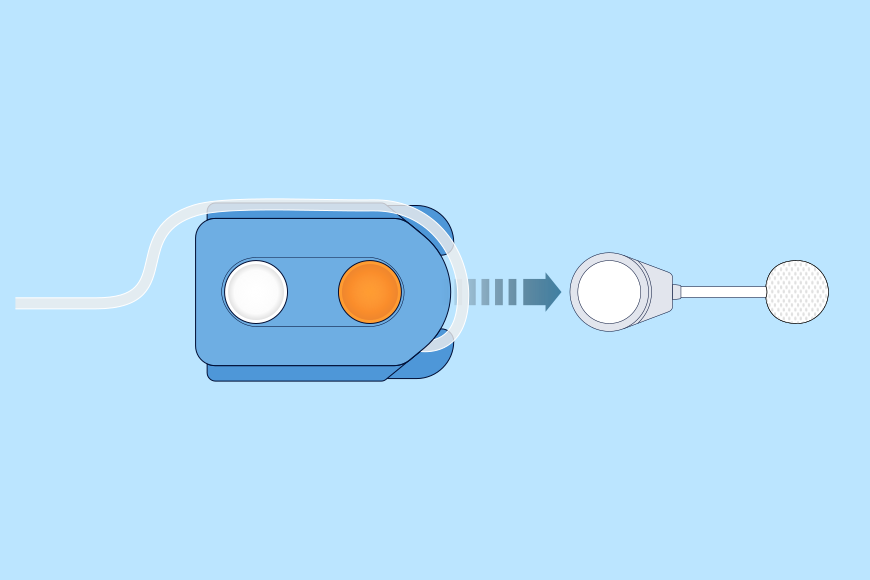
PD Connect replaces the traditional extension tubing with a discreet connection port. The port is connected to the patient’s existing PD catheter and secured to the skin using an adhesive material.
The dialysis fluid is connected through a system consisting of two cassettes. The first cassette is used to connect the system, while the second is used to disconnect the transfer set.
This makes the connection itself a central part of the product’s functionality and user experience.
For Transcutan, the ambition has been to create a solution that is easy for patients to understand and handle, while also meeting the technical requirements of a medical device.
From multiple concepts to a simpler solution
When OIM joined the project, the assignment was to work together with Transcutan to develop and further refine the solution.
Several concepts were developed and evaluated throughout the project. An early concept was a so-called “tower” solution with reusable components. When this proved difficult to realise from a mechanical engineering perspective, development moved on to another concept: a reusable tool loaded with two individually sterile-packaged cassettes.
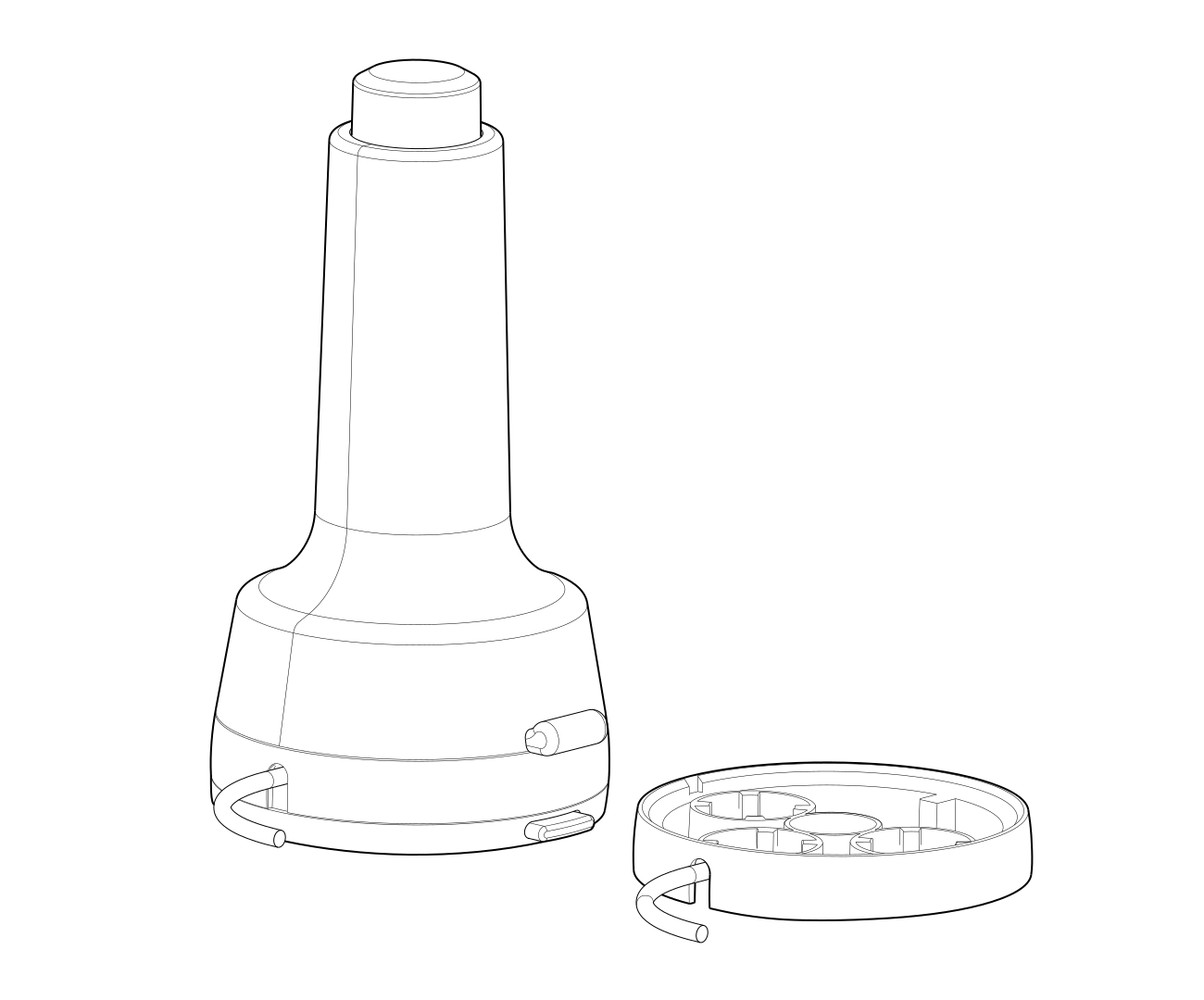
This concept was also further developed and evaluated. Eventually, the reusable tool was removed, and the solution evolved into what became known as “All in Two”, consisting of two sterile, single-use cassettes.
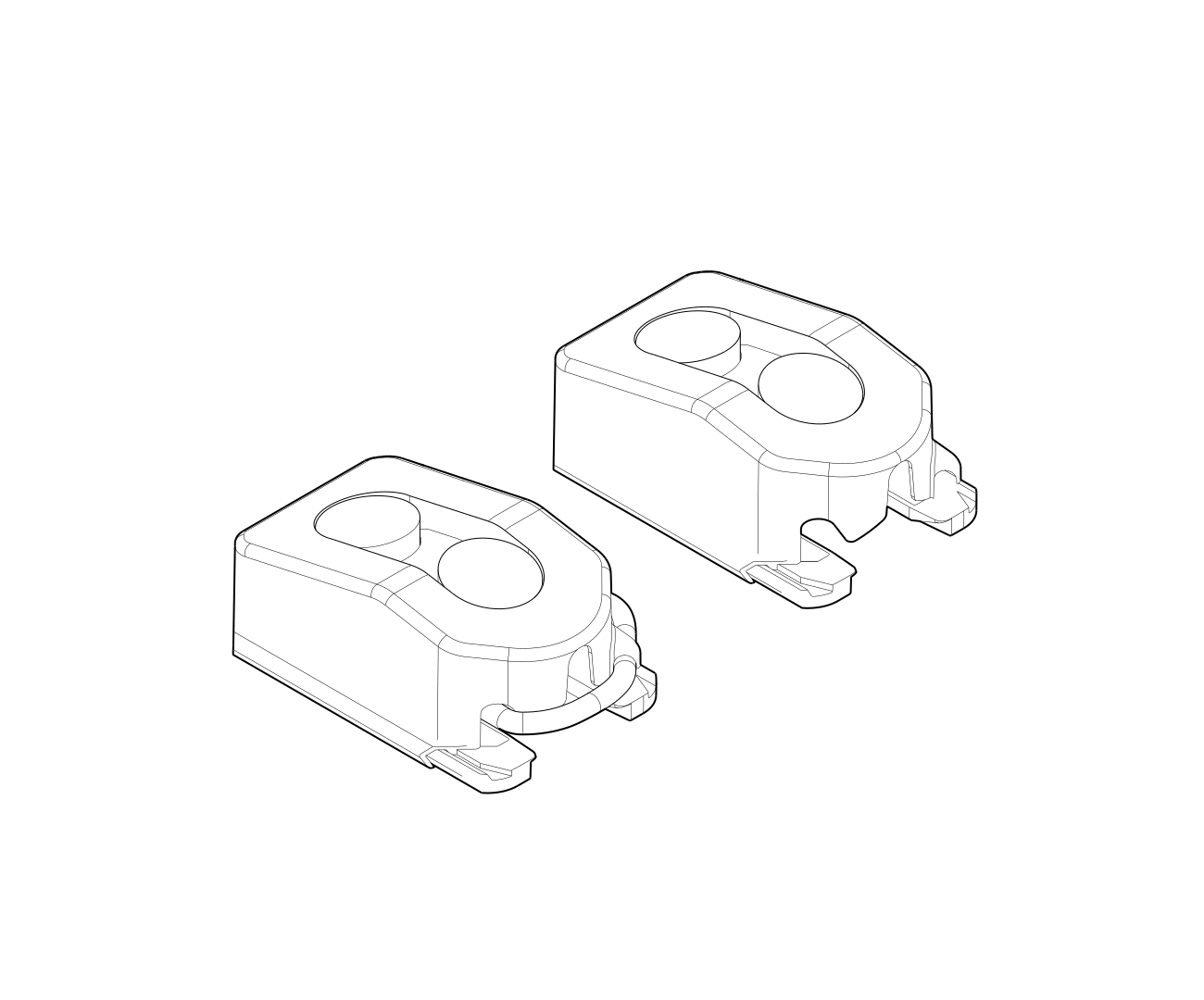
The development journey illustrates how concepts have been continuously reassessed and refined based on technical feasibility, handling requirements and the product’s intended use.
From user needs to market
Developing a medical device is about more than making the technology work. It also requires an understanding of user needs, how the product will be used and what it takes for the solution to make a difference in a competitive market.
Alongside the technical development, OIM has therefore taken a broader approach to PD Connect. Through design research, user flow mapping and comparisons with existing solutions, the team has explored how patients currently manage their treatment, what needs they have and where there is room for improvement.

The work has extended beyond the product itself. OIM has also developed recommendations on how the concept could be positioned and introduced to the market, focusing on how to communicate the solution’s value to relevant target audiences.
This has given Transcutan a broader foundation for developing PD Connect, bringing together user experience, technical functionality and commercial considerations from an early stage of the development process.
Bringing multiple requirements together in one product
The technical challenge has been to make a wide range of requirements work together in one integrated solution.
The connection port needs to be discreet and comfortable for patients to wear, while connecting to their existing PD catheter. The cassettes handle the actual connection and disconnection of the dialysis system, where functions such as fluid flow, valves and seals need to work together to ensure reliable operation.
The entire solution needs to be simple and intuitive to use and compatible with existing dialysis fluid systems. Material selection and design must also take into account the product’s intended healthcare applications and its contact with the patient.

At the same time, the solution must address requirements related to cleanliness and contamination, be cost-effective and be suitable for manufacturing at higher volumes.
It is the combination of user needs, technical requirements and manufacturing considerations that makes this product development project a true engineering challenge.
From CAD to a real product
OIM’s work has involved both mechanical design and hands-on product development.
Prototypes have been developed to evaluate functionality, usability and design in practice. An important part of the process has been turning CAD models and ideas into physical components, followed by testing and troubleshooting using real materials.
Seals, fluid flows, valves and material choices have all needed to be evaluated in parallel. When a solution has not worked as intended, it has been possible to make adjustments, test again and improve the design.
Hands-on development has also been essential in understanding how the solution performs beyond the CAD environment. Designing a component is one thing. Making an entire system work together reliably and intuitively is another.
Throughout the project, OIM has also worked on adapting the design for manufacturing and evaluating how the solution can be produced at higher volumes.
The user at the centre
Technology is only one part of the solution. PD Connect is intended for people who need to understand and handle the product as part of their everyday lives.
That is why OIM has worked systematically to understand the needs of both patients and healthcare professionals. The work has included planning and conducting user studies, mapping user flows and gathering insights into how the product needs to function in practice.
Simplicity has been a key consideration. Does the user understand what needs to be done and in what order? Is it clear which component to use first? Can the product be handled without the user having to think about how it works? Questions like these have influenced both the design and engineering.
In this way, the user perspective has been an integral part of the development process, rather than something evaluated only after the product has taken shape.
A close collaboration
Transcutan contacted OIM following a recommendation. They needed additional product development capacity and a partner who could take greater responsibility for the development process.
After evaluating several product development companies, Transcutan chose OIM.
One important reason was OIM’s ability to offer a combination of expertise and a way of working that suited the project. Rather than simply handling individual tasks, OIM’s team could become a more self-sufficient part of the product development process and work closely with Transcutan’s organisation.
This close collaboration has been an important part of the project.
Transcutan describes the experience:
“Very rewarding and enjoyable to work with such friendly and skilled people.”
They also highlight OIM’s commitment and ability to take initiative:
“It really felt like we were working in the same company, towards the same goal.”
The collaboration has been particularly valuable during user meetings:
“They are really good at bringing back input from user meetings and translating it into the design and engineering.”
And perhaps the strongest endorsement of all:
“We wouldn’t have come this far in the project without OIM.”
Product development that makes a difference
PD Connect is an ongoing development project, with the solution continuing to evolve and be evaluated together with Transcutan, relevant users and other areas of expertise.
For OIM, the project is a great example of what product development means when multiple perspectives need to come together in one solution.
The technology needs to work, the product needs to be manufacturable, the user needs to understand it and all the different elements need to function together.
It is at this intersection of people, technology and production that OIM does its best work.
Together with Transcutan, we continue to develop PD Connect, turning a complex idea into a solution designed to feel as simple as possible for the people who use it.
Read more about Transcutan here